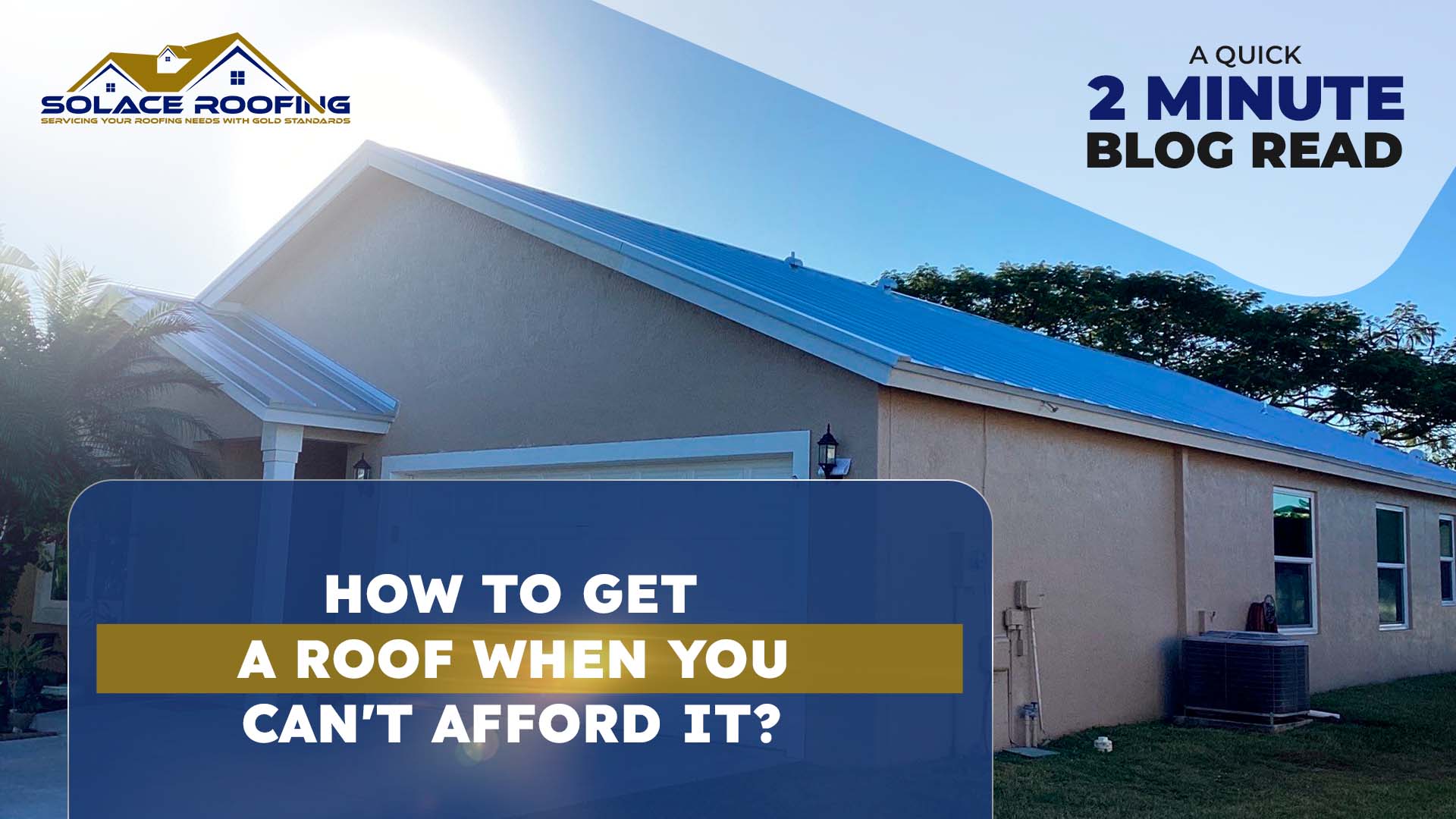
How to Afford a New Roof
The most practical ways to afford a new roof when you’re short on cash are insurance, contractor financing, and government assistance programs — and in Florida, all three are more accessible than most homeowners realize. A roof replacement is a major expense, but it’s rarely an all-or-nothing situation. There are structured paths that let Treasure Coast homeowners get the roof protection their home needs without paying the full cost out of pocket on day one.
Here’s how to explore each option and what to ask before committing.
Why Waiting Costs More
A roof that needs replacing doesn’t improve with time. Deferred replacement compounds into larger repair bills, interior water damage, and mold remediation costs that can dwarf the original roofing estimate. The cost of doing nothing is real — and often higher than the financing option that would have solved it earlier.
Understanding your options now puts you in control of the decision instead of having the decision made for you by the next storm.
5 Ways to Get a New Roof When You Can’t Afford It Upfront
1. File a Homeowners Insurance Claim if the Damage Is Storm-Related
Many Florida homeowners don’t realize their roof replacement may be partially or fully covered. If your roof was damaged by wind, hail, a falling tree, or another covered weather event, your policy may pay for most of the cost — leaving you responsible only for your deductible. Insurance claims have filing deadlines, and documentation gathered right after a storm is far stronger than documentation assembled months later. Solace Roofing works alongside homeowners navigating the insurance claims process and can help you understand what a claim could cover before you decide how to proceed.
2. Ask Your Contractor About Financing Options
Many roofing contractors offer financing programs that let homeowners spread the cost over time with manageable monthly payments. As a GAF Master Elite® Contractor, Solace Roofing has access to GAF financing options designed specifically for roofing projects. Financing lets you address the problem now — before deferred damage adds to the bill — rather than waiting until you’ve saved the full amount. Ask about interest rates, term length, and approval requirements before committing to any plan.
3. Look Into PACE Financing for Florida Homeowners
Florida participates in PACE financing — Property Assessed Clean Energy — a program that allows homeowners to finance qualifying home improvements, including certain roofing systems, through an assessment added to their property tax bill. PACE financing doesn’t require a down payment and is repaid over time as part of your regular taxes. For homeowners who may not qualify for traditional financing, PACE can be a viable path. That said, the assessment stays with the property, which can affect a future sale — and your lender should be consulted if you have an active mortgage. According to Florida’s Department of Agriculture and Consumer Services, several approved PACE providers operate statewide.
4. Research Government Assistance and Community Programs
HUD’s Title I Home Improvement Loan program offers federally backed loans for residential improvements, including roofing, with flexible credit requirements that make them more accessible than conventional loans. Some Florida counties also offer emergency home repair assistance for qualifying low-income homeowners — particularly for roof damage that creates habitability concerns. Contact your county’s community development office or a HUD-approved housing counselor to find out what’s available in your area. These programs vary by location and funding availability, but they’re worth investigating before taking on higher-interest financing.
5. Prioritize Targeted Repair Over Full Replacement When Possible
Not every situation requires a full replacement today. If your roof has localized damage — a failed section, compromised flashing, or a specific leak source — a targeted roof repair can address the immediate problem and buy meaningful time while you plan for the larger investment. A licensed contractor can tell you honestly whether repair is a viable short-term path or whether the system is too deteriorated for repair to make financial sense. Addressing a smaller scope now is almost always smarter than deferring everything.
There’s Almost Always a Path Forward
Affording a new roof rarely comes down to a single option. For most Treasure Coast homeowners, the answer is a combination — an insurance claim that handles part of the cost, financing that covers the remainder, or a repair that bridges the gap while long-term plans come together. The key is knowing how to afford a new roof before the situation becomes urgent.
Schedule a free assessment with Solace Roofing and let’s look at what your roof actually needs — and what paths make sense for your situation.
Solace Roofing | Craftsmen Who Care

David Penagos