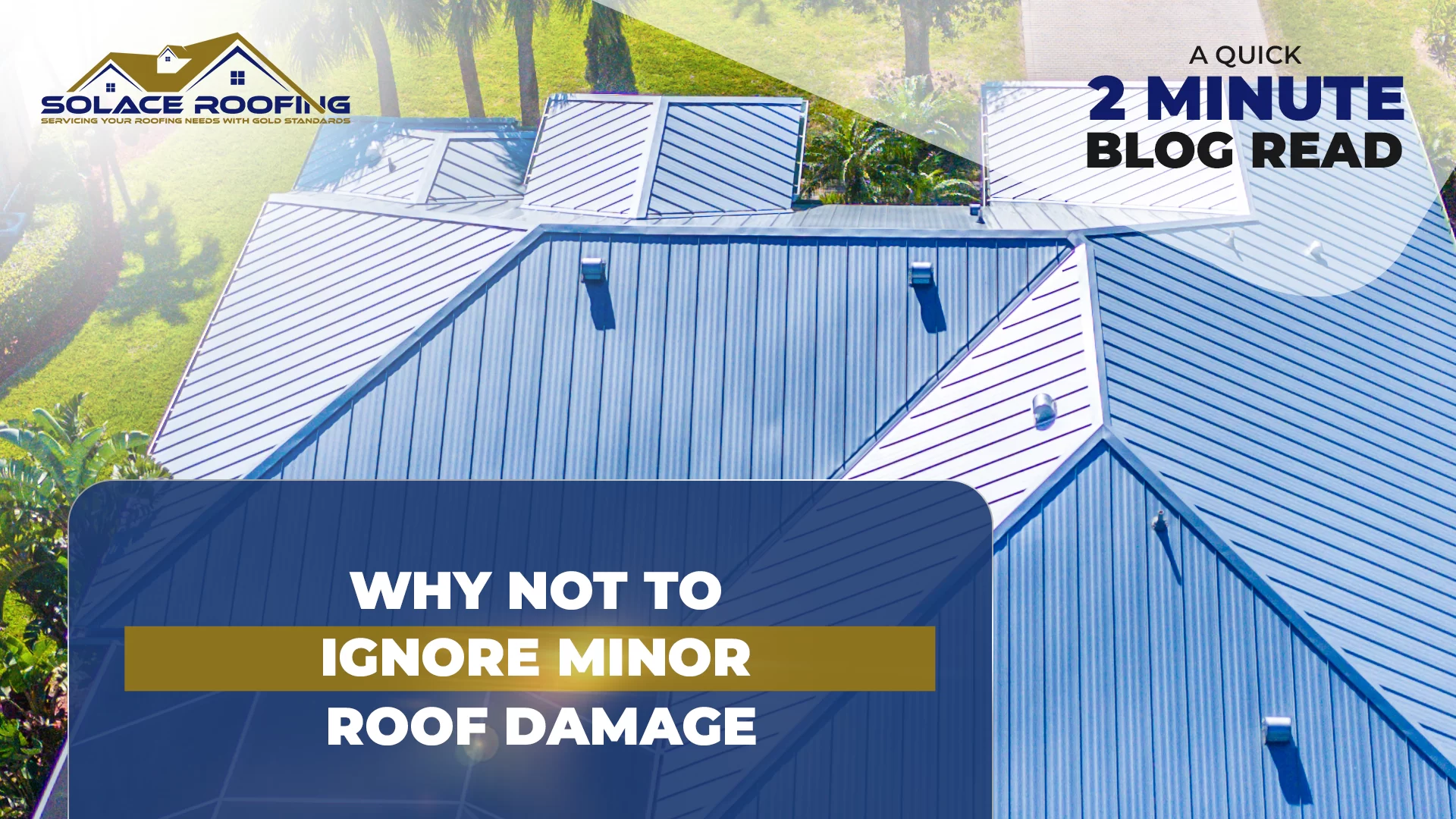

Why Not To Ignore Minor Roof Damage
Why Not To Ignore Minor Roof Damage is a question many homeowners don’t ask until it’s too late. A small leak, a lifted shingle, or minor flashing damage can seem harmless at first, but in Florida’s climate, even small roofing issues can escalate quickly. Heat, humidity, and heavy rain work together to turn simple repairs into expensive structural problems.
Understanding what happens if you ignore minor roof damage can help homeowners avoid premature roof replacement, interior damage, and unexpected costs.
What Happens If You Ignore Minor Roof Damage?
Roofing systems are designed to work as a complete barrier. When one component fails—even slightly—water and air intrusion begin affecting the layers beneath the surface. Over time, this leads to saturated underlayment, rotting decking, insulation damage, and mold growth.
What could have been a quick repair often turns into the need for a full roof replacement, plus interior repairs that extend far beyond the roof itself.
Why Small Roof Problems Get Worse in Florida
Florida roofs face constant exposure to UV radiation, frequent rainstorms, and sudden temperature changes. These conditions accelerate material breakdown and allow moisture to spread quickly once it enters the roofing system.
The Federal Emergency Management Agency warns that delayed roof repairs significantly increase the risk of secondary damage during storms.
5 Tips for Spotting and Addressing Minor Roof Damage Early
1. Watch for Missing or Lifted Shingles
High winds can loosen shingles without tearing them off completely. These lifted shingles allow water to seep underneath, damaging underlayment and decking.
2. Pay Attention to Flashing and Sealants
Cracked sealant or corroded flashing around vents, chimneys, and skylights is a common entry point for water.
According to the National Roofing Contractors Association, flashing failures are one of the most frequent causes of roof leaks.
3. Look for Interior Warning Signs
Water stains on ceilings, bubbling paint, or musty odors often indicate a slow leak that’s been active longer than expected.
Tip: Interior signs usually mean the problem is already beyond the surface layer.
4. Check Gutters and Roof Edges
Granules in gutters or water overflowing at roof edges may indicate shingle deterioration or drainage issues.
Poor drainage allows water to back up under shingles, accelerating roof failure.
5. Schedule Routine Professional Inspections
Annual inspections help identify small problems before they spread. Documentation from a licensed roofer also protects homeowners during insurance claims or home sales.
The Insurance Institute for Business & Home Safety emphasizes preventative maintenance as a key factor in reducing long-term roofing losses.
The Cost Difference: Repair vs. Replacement
A minor roof repair is typically a small, manageable expense. However, when damage is ignored, repair costs increase exponentially. Saturated decking often requires replacement, mold remediation may be necessary, and structural components can weaken.
By the time leaks become visible inside the home, the roofing system may no longer be eligible for repair, forcing a full replacement.
How Solace Roofing Helps Homeowners Act Early
At Solace Roofing, inspections are designed to identify early-stage damage and provide honest recommendations. Our goal is to help homeowners extend the life of their roof whenever possible—without compromising safety or performance.
Early action doesn’t just save money; it preserves your home’s integrity.
Why Not To Ignore Minor Roof Damage comes down to one simple truth: small problems rarely stay small. In our climate, delaying repairs almost always leads to higher costs and bigger disruptions.
If you’ve noticed minor roof issues—or just want peace of mind—addressing them early can prevent the transition from a simple repair to a costly full replacement. Understanding why not to ignore minor roof damage is the first step toward protecting your home long-term.
Solace Roofing | Craftsmen Who Care

David Penagos