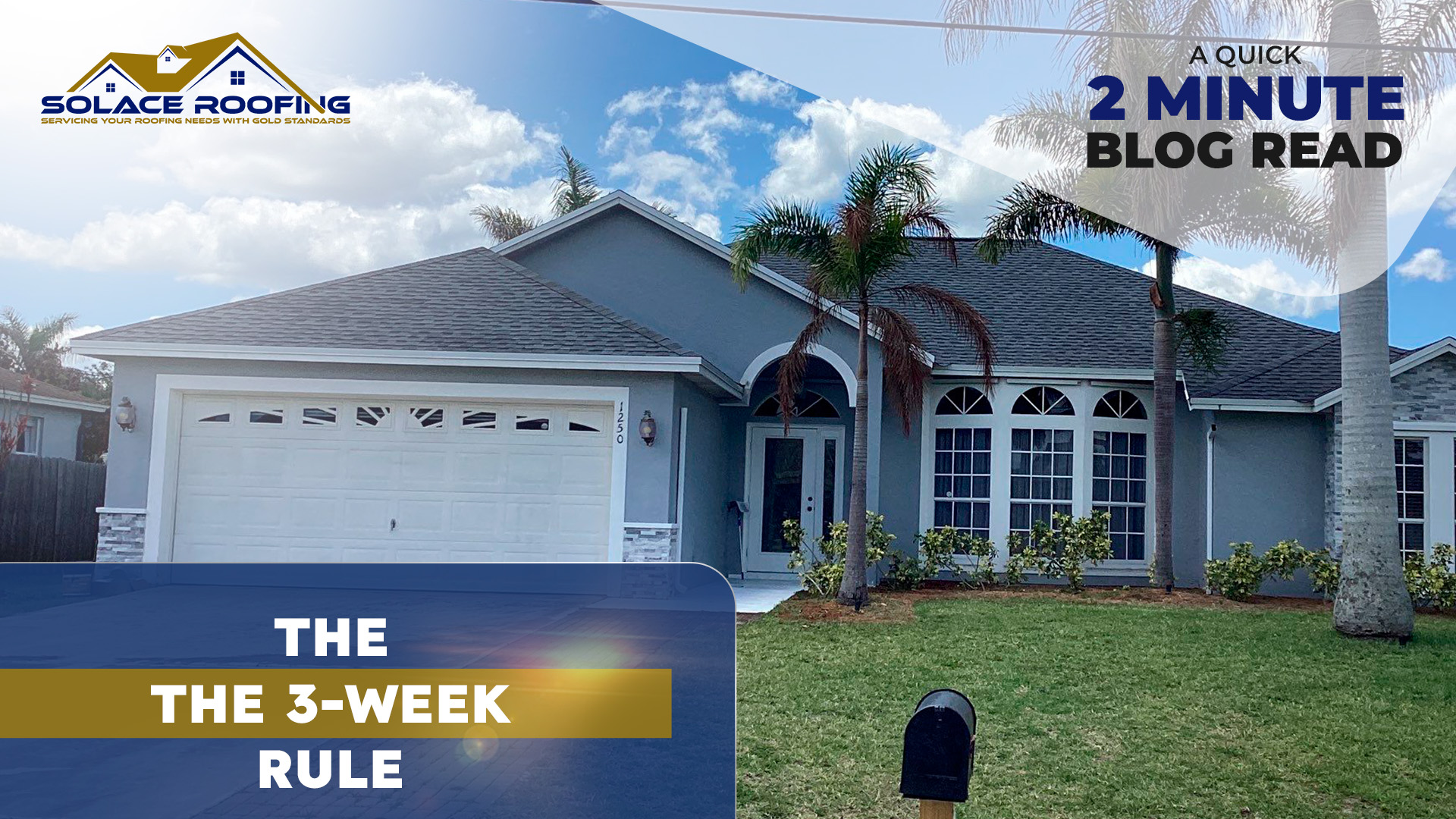

The 3-Week Rule
The 3-Week Rule is a concept every homebuyer and seller should understand when a roof replacement becomes part of a real estate transaction. In Florida, it is common for a roof issue to surface during the final stages of a home closing. An inspection reveals aging shingles, storm damage, or a roof that no longer meets insurance requirements, and suddenly everyone is racing against the clock.
The good news is that a roof replacement does not have to derail a sale.
With the right contractor, proper planning, and clear communication, many roofing projects can be completed within the timeline needed to keep a transaction moving forward.
If you are buying or selling a home, understanding The 3-Week Rule can help reduce stress and avoid costly delays.
1. Start the Roofing Conversation Immediately
The biggest mistake homeowners make is waiting too long to address roofing concerns.
Once an inspection identifies a potential issue, time becomes your most valuable resource. Insurance companies, lenders, buyers, and sellers all need answers quickly.
The moment a roof concern appears, schedule a professional roofing inspection. Early action creates options and prevents last-minute surprises that can threaten the closing timeline.
In real estate transactions, every day matters.
2. Understand What the Inspection Is Really Saying
Many inspection reports include roofing comments that sound alarming at first glance.
Terms such as granular loss, flashing deterioration, underlayment concerns, or limited remaining lifespan often raise red flags for buyers and lenders.
However, not every issue requires a complete replacement.
A professional roofing contractor can evaluate the findings, determine the true condition of the roofing system, and provide recommendations based on facts rather than assumptions.
This clarity helps everyone involved make informed decisions.
3. Coordinate With Insurance Requirements
In Florida, insurance often becomes a major factor during home sales.
Many insurance carriers evaluate roof age, material type, and overall condition before issuing or renewing policies. A roof that appears acceptable to a homeowner may still create challenges during underwriting.
According to the Florida Office of Insurance Regulation, property condition can significantly influence insurability.
When roofing concerns arise during a closing, having documentation from a qualified contractor can help support insurance discussions and avoid unnecessary delays.
4. Choose a Contractor Who Understands Closing Timelines
Not every roofing project happens under ideal circumstances.
When a home is under contract, timing becomes critical. Buyers, sellers, agents, lenders, and insurance representatives are all working toward a specific closing date.
An experienced roofing contractor understands these pressures and can help coordinate inspections, estimates, permits, scheduling, and project completion efficiently.
Communication becomes just as important as craftsmanship.
A contractor familiar with real estate transactions can often help keep the process moving smoothly.
5. Focus on the Complete Roofing System
When time is limited, some homeowners look for the quickest possible solution.
However, a roof replacement should never sacrifice quality for speed.
A proper roofing system includes decking evaluation, leak barriers, underlayment, flashing, ventilation, starter strips, and shingles. Each component plays a role in protecting the home.
Cutting corners during a real estate transaction can create future problems for the new homeowner and liability concerns for the seller.
The goal should always be a professional installation completed correctly the first time.
6. Build a Small Buffer Into the Timeline
Even well-planned projects can encounter weather delays, permit processing times, or material delivery challenges.
That is why The 3-Week Rule works so well as a planning guideline.
Three weeks often provides enough time for inspections, paperwork, scheduling, installation, and final documentation without creating unnecessary pressure.
Waiting until the final few days before closing dramatically reduces flexibility.
A little buffer can make a big difference.
Why The 3-Week Rule Works
Most real estate transactions move quickly once a property goes under contract.
When roofing issues appear late in the process, emotions often run high. Buyers worry about future expenses. Sellers worry about losing the deal. Agents work to keep everything on track.
The 3-Week Rule provides a practical framework.
By addressing roofing concerns early, homeowners gain more control over the process and avoid rushed decisions that can impact the transaction.
Planning ahead creates confidence for everyone involved.
Protect the Sale and Protect the Home
A roof replacement does not have to become a roadblock during a home sale.
With proper planning, professional inspections, and experienced contractors, many roofing projects can be completed efficiently while maintaining the quality standards homeowners deserve.
At Solace Roofing, we understand the unique challenges that come with roofing projects tied to real estate transactions.
Final Thoughts on The 3-Week Rule
The 3-Week Rule is about preparation, communication, and timing.
Whether you are buying or selling a home, addressing roofing concerns early can help prevent delays, satisfy insurance requirements, and keep your closing on schedule.
When a roof replacement becomes part of a transaction, having a clear plan and the right contractor can make all the difference. Following The 3-Week Rule helps homeowners move forward with confidence while protecting one of their most important investments.
Solace Roofing | Craftsmen Who Care

David Penagos