Can a New Roof Lower Your Energy Bills?
If you are dealing with rising utility costs, your roof may be part of the problem. In Florida, where heat and humidity are constant, an aging roofing system can trap heat and force your air conditioning to work harder. That is why more homeowners are asking the same question. Can a new roof really help with lower energy bills?
The answer is yes, and the impact can be significant when the system is designed correctly.
1. Why Your Roof Impacts Energy Efficiency
Your roof is the first surface that absorbs sunlight all day long. When shingles begin to wear, they lose their reflective granules and start holding more heat. That heat transfers through the decking and into your attic space. Once that happens, your home becomes harder to cool, and your HVAC system runs longer cycles. A new roof restores that protective barrier and helps regulate how much heat enters your home in the first place.
2. Reflectivity Reduces Heat at the Source
Modern roofing materials are built to reflect sunlight instead of absorbing it. This is especially important in Florida, where UV exposure is constant. Metal roofing and cool rated shingles are designed to push heat away from your home before it ever reaches your attic. According to the Cool Roof Rating Council, reflective materials can significantly lower roof surface temperatures. This reduction in heat directly translates into less work for your air conditioning system.
3. Proper Ventilation Prevents Heat Buildup
Ventilation is one of the most overlooked parts of a roofing system. Without proper airflow, hot air becomes trapped in the attic and creates a buildup that radiates into your living space. A new roof installation allows contractors to correct this by installing balanced intake and exhaust vents. This continuous airflow helps remove heat and moisture, keeping attic temperatures stable and reducing the strain on your cooling system.
4. Insulation Strengthens Temperature Control
Even the best roofing materials cannot perform without proper insulation. Insulation acts as a barrier that slows down heat transfer between your attic and your home. During a roof replacement, it is common to identify gaps, compressed areas, or outdated insulation that no longer performs effectively. Upgrading insulation during this process helps maintain consistent indoor temperatures and prevents cool air from escaping.
5. Sealing and Flashing Eliminate Energy Loss
A new roof is not just about shingles. It is also about sealing every vulnerable point where air can escape or enter. Flashing around chimneys, vents, and valleys plays a critical role in keeping your home airtight. When these areas are properly installed and sealed, your home retains conditioned air more efficiently. This means your HVAC system does not have to compensate for leaks, which helps reduce overall energy consumption.
6. Modern Materials Outperform Older Systems
Roofing technology has improved significantly over the years. Older shingles and underlayment simply do not perform at the same level as today’s materials. New systems are designed with energy efficiency in mind, combining reflectivity, durability, and moisture resistance. Choosing the right material for Florida’s climate can make a noticeable difference in both comfort and monthly utility costs.
Choosing the Right Roofing System
Material selection is important, but proper installation is what ensures performance. A roofing system must include quality underlayment, secure decking, and a well planned ventilation layout.
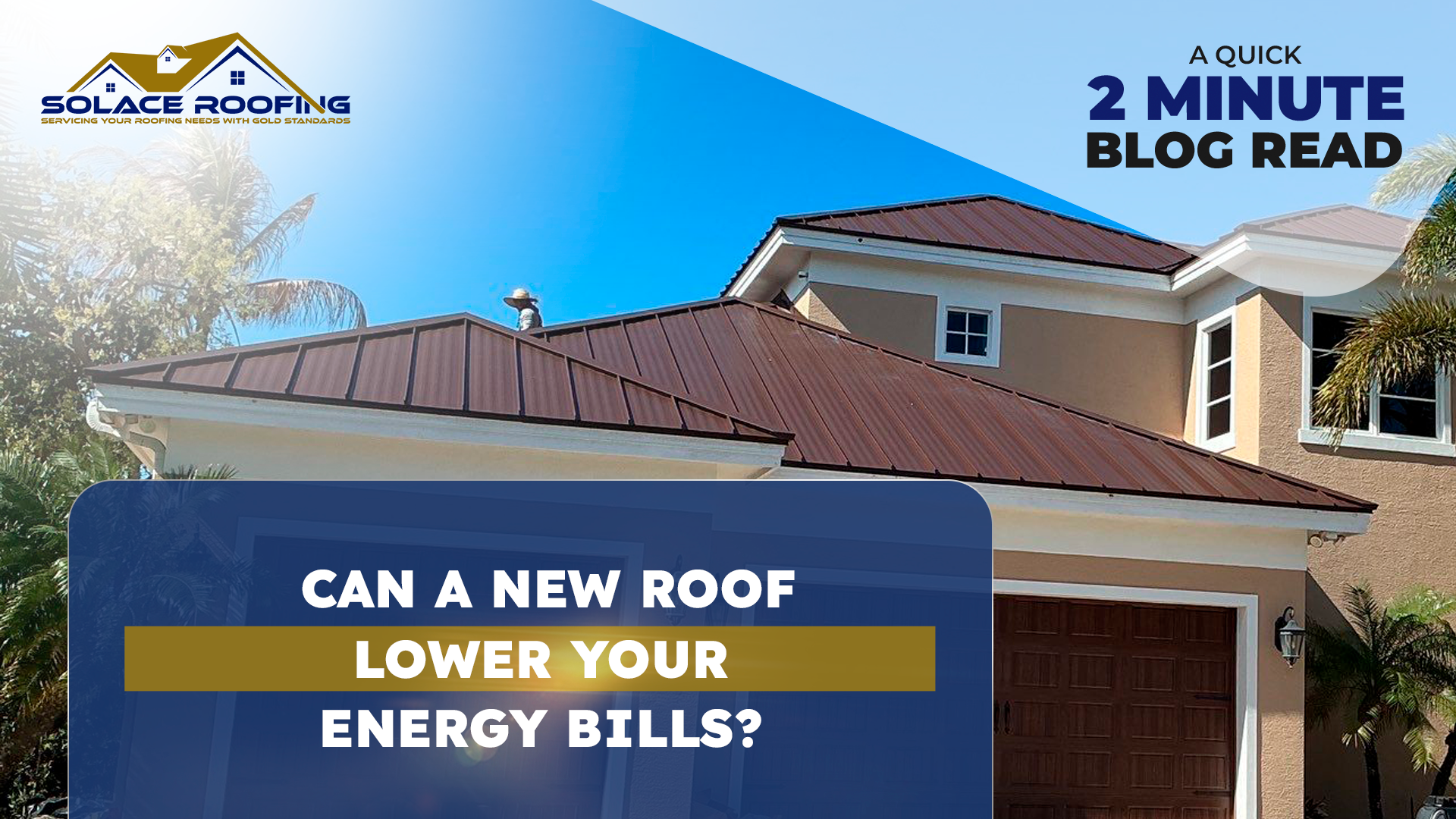
Metal roofing is one of the most energy efficient choices, while architectural shingles with reflective properties also perform well in Florida conditions.
Long Term Savings and Everyday Comfort
Lower energy bills are only part of the benefit. A new roof also improves indoor comfort by stabilizing temperatures and reducing humidity buildup.
Over time, this leads to less wear on your HVAC system and fewer unexpected repairs.
So, can a new roof help with lower energy bills? Absolutely. When your roofing system is designed with reflectivity, insulation, and ventilation in mind, it becomes a powerful tool for improving your home’s efficiency.
If you want lasting comfort and real savings, upgrading your roof is one of the smartest ways to achieve lower energy bills.
Solace Roofing | Craftsmen Who Care

David Penagos