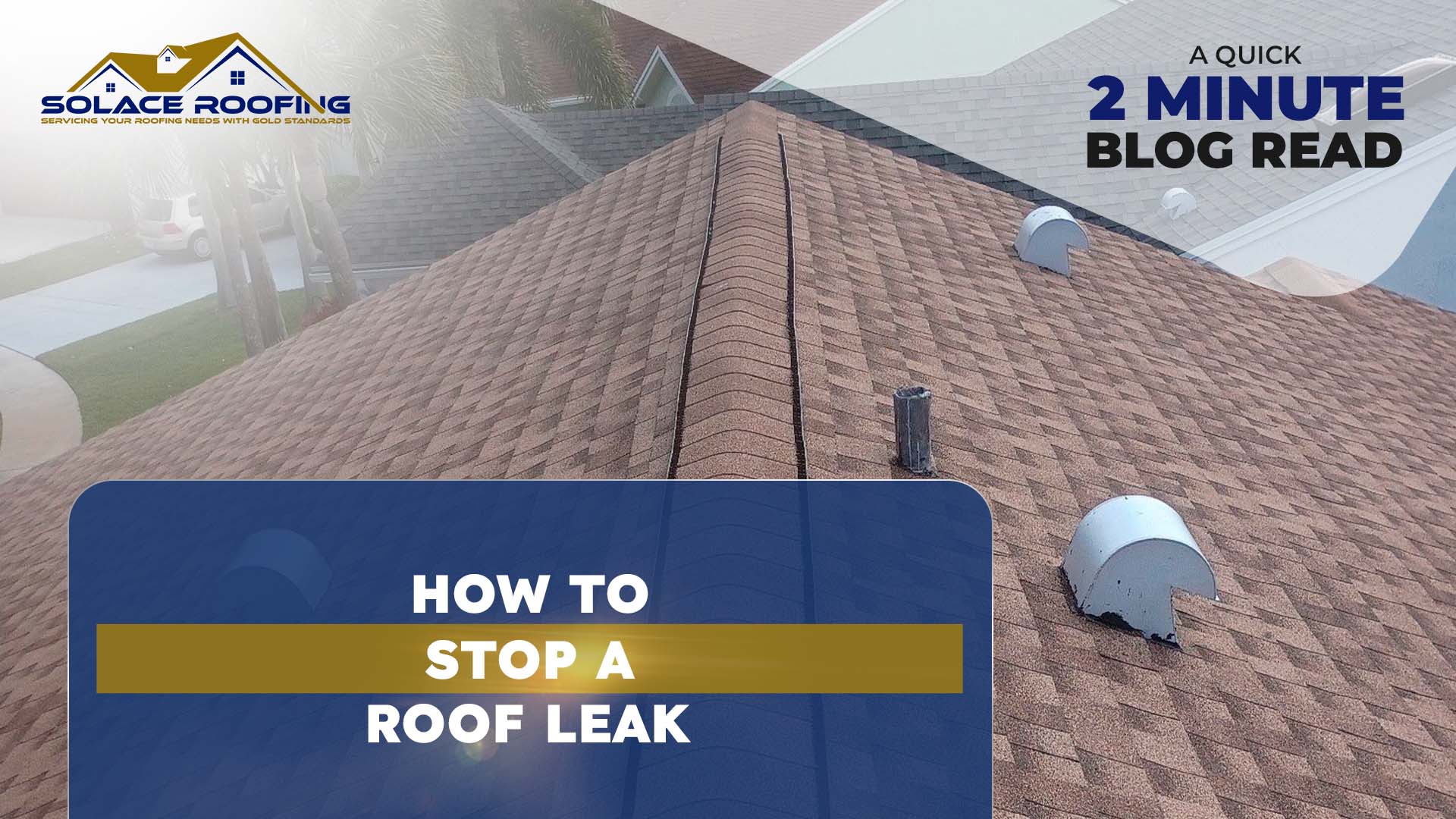
How to Stop a Roof Leak
To stop a roof leak, your first move is to locate the source, contain the water inside, and protect the area with a tarp while you get a licensed professional on site — because what you see on your ceiling is rarely where the problem actually starts. Roof leaks travel. Water enters at one point, moves along the underlayment or decking, and surfaces several feet away from the true entry point. In Florida’s climate, every hour a leak goes unaddressed is another hour of moisture working its way deeper into your home’s structure.
Here’s what to do when you discover a roof leak on the Treasure Coast — and why professional help is the only real solution.
Why Roof Leaks Are Rarely What They Look Like
A water stain on the ceiling doesn’t tell you where the leak is. It tells you where the water ended up.
This is the most common misunderstanding homeowners have about roof leaks. The entry point could be a failed flashing detail, a cracked pipe boot collar, a lifted shingle, or a compromised valley — all of which may be several feet from where you’re seeing the damage inside. Temporary fixes applied to the wrong location buy time but solve nothing. Getting the source right is everything.
7 Tips to Stop a Roof Leak the Right Way
1. Find the Source Before You Touch Anything
Go into your attic with a flashlight during daylight hours and look for water staining, wet insulation, or visible light coming through the decking. Trace the moisture uphill from where the stain appears — water always travels downward before it drips, so the entry point is almost always higher up the roof plane than the damage suggests. Pinpointing the source accurately determines whether you need a flashing repair, a shingle replacement, or something more significant.
2. Contain the Water Inside to Prevent Compounding Damage
Place buckets under any active drips and use towels or plastic sheeting to protect flooring, furniture, and insulation from secondary water damage. If water is pooling on drywall or in light fixtures, turn off the electricity to that area of the home as a safety precaution. Getting water contained quickly limits how much damage spreads while you wait for a professional assessment.
3. Apply a Tarp as Emergency Protection
If it’s safe to access your roof and the pitch allows it, a heavy-duty polyethylene tarp secured over the affected area can slow water intrusion until a licensed roofer arrives. Extend the tarp past the ridge and weight or secure the edges properly so wind doesn’t pull it loose. This is a short-term measure only — not a repair. According to FEMA’s home disaster guidance, tarping is a recognized emergency mitigation step, not a substitute for professional repair.
4. Check Your Gutters and Downspouts Immediately
Clogged gutters can cause water to back up under your roofing material at the eave, creating a leak that mimics structural damage when it’s actually a drainage issue. Clear any debris and check that gutters are properly pitched toward the downspouts. If overflow is the culprit, this is a fast fix that may stop the immediate leak while you schedule a full inspection.
5. Inspect Flashing Around All Roof Penetrations
Chimneys, skylights, vent pipes, and HVAC units are the most common leak sources on Florida roofs. The flashing sealing these penetrations expands and contracts with Florida’s extreme temperature swings, eventually pulling away from its seal and creating gaps that funnel water directly into the roof system. If you can safely see the flashing from the ground or through the attic, look for visible separation, rust staining, or lifted edges. A professional roof inspection will assess every penetration point accurately.
6. Avoid DIY Patches Without a Professional Assessment
Roofing cement, caulk, and peel-and-stick patches are widely available and widely misused. Applied correctly to the right location, they can buy time. Applied to the wrong spot — or over underlying damage that needs to be addressed — they create a false sense of security while moisture continues to move beneath the surface. Patching a symptom without diagnosing the cause is one of the most common reasons minor roof leaks turn into major roof repairs.
7. Call a Licensed Roofer Before the Damage Spreads
This is the most important step on this list. A licensed roofing professional can identify the true source of the leak, assess how far the moisture has traveled, and give you an honest evaluation of whether you need a targeted repair or a broader solution. Waiting even a few days in Florida’s humidity allows mold to establish in wet insulation and decking — turning a repair into a remediation project. The Insurance Institute for Business & Home Safety consistently identifies prompt professional intervention as the single most effective way to limit roof leak damage.
Solace Roofing responds quickly to leak calls across the Treasure Coast. As a GAF Master Elite® Contractor, we bring the expertise to find the source, fix it correctly, and back the work with a warranty that protects you long after we leave.
Stop the Leak. Protect the Home.
Knowing how to stop a roof leak starts with acting fast, containing the damage, and getting a licensed professional to diagnose the source before temporary measures mask a growing problem. In Florida, a small leak never stays small for long.
Don’t wait for the damage to show you how serious it is. Schedule your free roof inspection today and let Solace Roofing find the source and fix it right.
Solace Roofing | Craftsmen Who Care

David Penagos