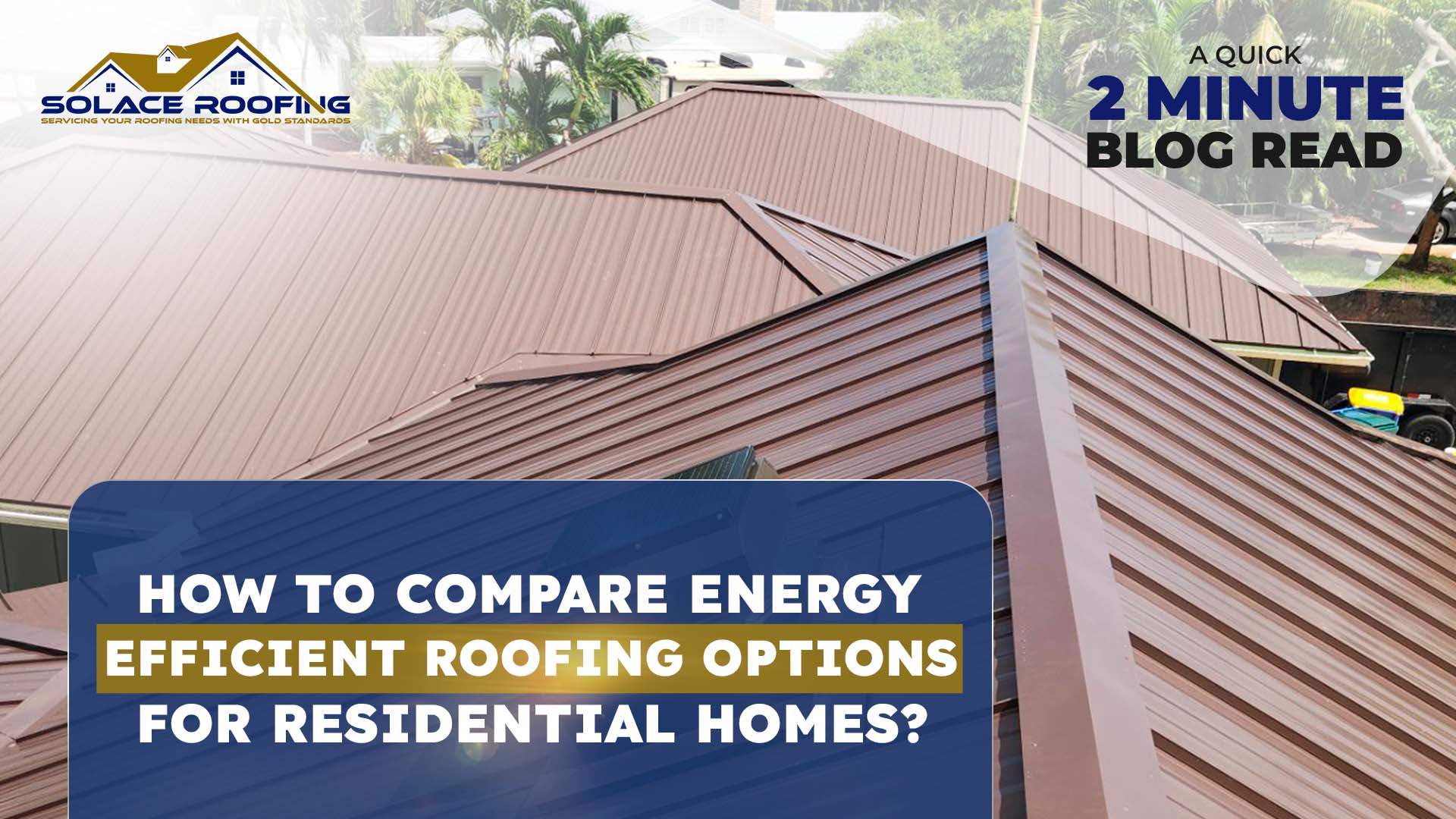
Energy Efficient Roofing
To compare energy efficient roofing options for a residential home, start with two numbers: solar reflectance and thermal emittance. Together, these values define how a roofing system manages solar heat — how much it reflects before absorption and how little it re-radiates afterward. Every other comparison point — lifespan, cost, aesthetics, manufacturer certification — layers on top of that thermal foundation. Florida homeowners on the Treasure Coast comparing energy efficient roofing options are making a decision that affects monthly utility bills, HVAC lifespan, interior comfort, and the return on their roofing investment for decades. Getting the comparison right requires looking at more than just the marketing claims on the package.
Here’s how to evaluate energy efficient roofing options side by side.
Why Roofing Material Choice Matters More in Florida
In a mild climate, the energy performance difference between roofing materials is noticeable but not dramatic. In Florida, where cooling demand runs most of the year and roof surface temperatures can exceed 150°F on summer afternoons, the gap between a high-performance energy efficient system and a conventional one translates directly into meaningful annual savings. The comparison criteria below apply everywhere — but their impact is magnified on the Treasure Coast.
8 Ways to Compare Energy Efficient Roofing Options
1. Start With Solar Reflectance Index Values
Solar Reflectance Index — SRI — is a single number that combines solar reflectance and thermal emittance into one comparable metric. A higher SRI means the material rejects more solar energy and re-radiates less heat. Standard dark asphalt shingles typically have an SRI near zero. Energy Star-rated cool shingles score meaningfully higher. White TPO membrane roofing and standing seam metal with cool-roof finishes score highest. When comparing products side by side, ask for the SRI value for each option — it cuts through marketing language and gives you a direct, apples-to-apples thermal performance comparison.
2. Look for Energy Star Certification
Energy Star certification for roofing products requires meeting minimum solar reflectance thresholds independently tested and verified by the EPA. A product with Energy Star certification has demonstrated real-world thermal performance — not a manufacturer’s own marketing claim. When comparing energy efficient roofing options, limit your shortlist to Energy Star-rated products. As a GAF Master Elite® Contractor, Solace Roofing installs Energy Star-rated shingle lines and cool-roof metal systems that meet verified performance standards.
3. Factor in Lifespan Alongside Energy Performance
A roofing material’s energy efficiency only delivers value for as long as the system is in service. A cool-roof coating with modest reflectance that lasts ten years delivers less lifetime energy savings than a standing seam metal system with high reflectance that lasts 50 years. When comparing options, calculate the energy savings per year and multiply by the expected system lifespan — not just the upfront performance rating. Longer-lived systems often justify a higher initial investment when the full energy benefit period is factored in.
4. Compare Total Cost of Ownership, Not Just Installation Price
Upfront installation cost is only one part of the comparison. Energy savings reduce monthly utility bills. Extended lifespan reduces future replacement frequency. Reduced HVAC load extends equipment life and lowers maintenance costs. According to the U.S. Department of Energy, total cost of ownership — including energy and maintenance savings over the system’s life — is the most accurate way to compare roofing investments in hot climates. A system that costs more to install but saves meaningfully on energy each year often wins the total cost comparison over a ten to twenty year horizon.
5. Evaluate Performance Specifically for Florida’s Climate
Not all energy efficient roofing products perform equally across climates. Some cool-roof systems are optimized for dry desert heat; others perform better in Florida’s combination of intense sun and high humidity. Reflective metal roofing and Energy Star-rated tile systems are proven performers in the Treasure Coast’s specific conditions. When reviewing product data, look for performance testing conducted in hot-humid climate zones — ASHRAE Climate Zone 1 or 2 — which represent Florida’s environment. A professional roof assessment from a contractor with local experience helps match product performance data to your actual conditions.
6. Consider Compatibility With Your Home’s Structure
Some energy efficient roofing options — particularly heavy tile systems — require structural assessment before installation on older homes. Others, like standing seam metal, are lighter than the shingle system they replace and suit most structures without modification. If your comparison includes tile roofing, budget for a structural evaluation as part of the selection process. Eliminating options that require structural upgrades may change the cost comparison meaningfully and narrow your shortlist to what’s actually practical for your home.
7. Check for Tax Credits and Rebate Eligibility
Federal energy efficiency tax credits and utility rebate programs can reduce the net cost of qualifying cool and energy efficient roofing installations. Eligibility depends on the specific product, installation date, and program terms in effect at the time. When comparing options, ask each contractor which products qualify for current incentives and factor the net-after-incentive cost into the comparison — not just the gross installation price. Solace Roofing can help identify which systems in their lineup carry current Energy Star ratings and potential incentive eligibility as part of the free estimate process.
8. Get a Professional Energy Assessment for Your Specific Home
General product comparisons give you a useful framework, but the right energy efficient roofing option for your home depends on variables specific to your property — roof orientation, attic insulation level, existing HVAC efficiency, shading, and local utility rates. A professional who has seen your home, assessed your current system, and understands the Treasure Coast market can translate general performance data into a projection relevant to your actual situation. That’s the comparison that leads to a confident decision — not one built on national averages that may not reflect your home’s conditions.
A Smart Energy Efficient Roofing Comparison Leads to a Better Investment
Energy efficient roofing for residential homes is a comparison that rewards doing the homework — SRI values, Energy Star ratings, total cost of ownership, climate-specific performance, and professional guidance all contribute to finding the system that delivers the best return for your home and your budget.
Solace Roofing installs energy efficient roofing options across the full spectrum — from cool shingles to standing seam metal — for homeowners throughout Stuart, Port St. Lucie, and the Treasure Coast. Schedule your free roof assessment today and get a side-by-side comparison built around your specific home.
Solace Roofing | Craftsmen Who Care

David Penagos