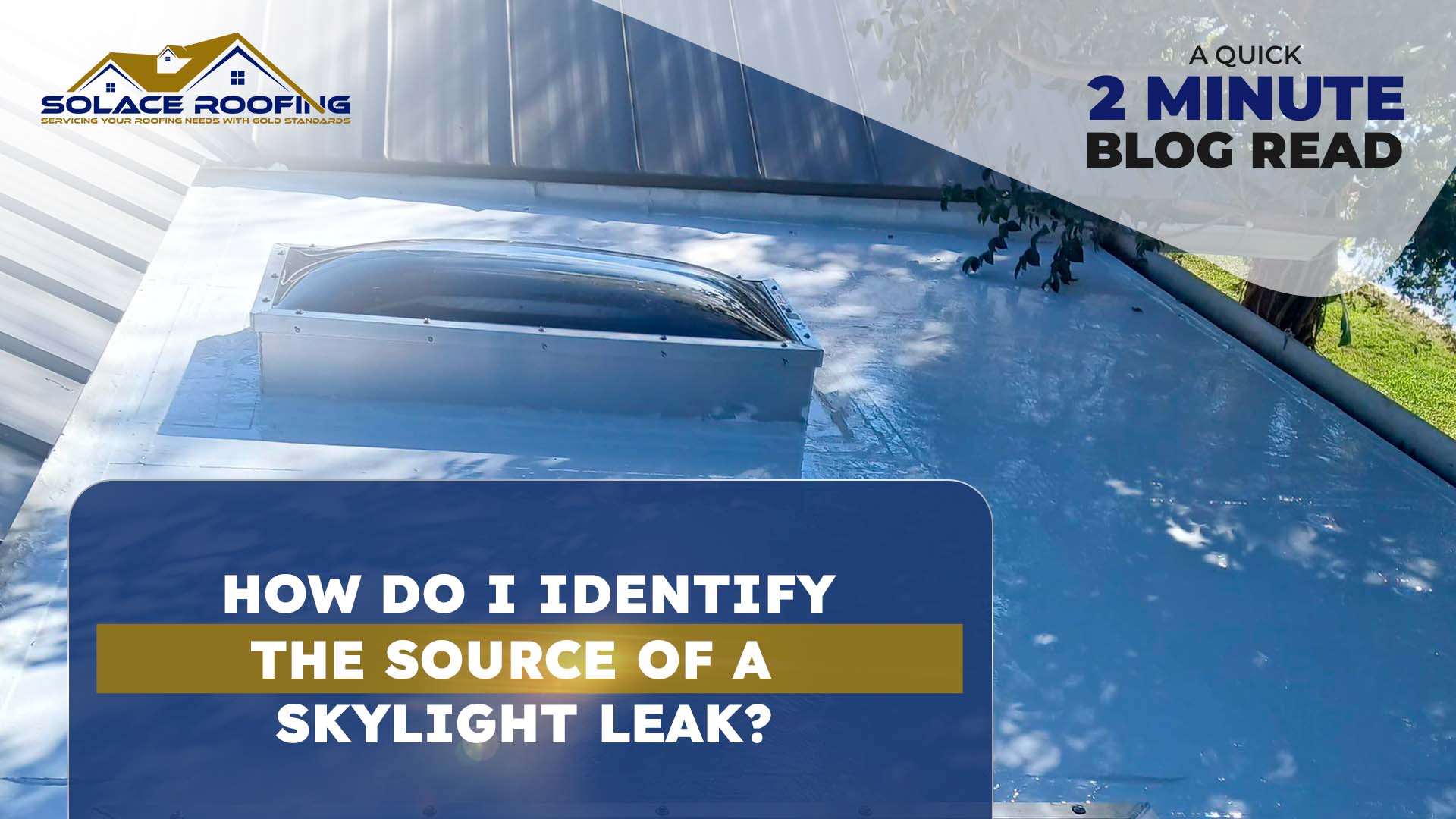

Leaking Skylight
The most common causes of a leaking skylight are failed flashing, deteriorated sealant, and improper original installation — roofing problems, not skylight problems, in the majority of cases. This distinction matters for Florida homeowners because it means most leaking skylights don’t require a new unit. They require a qualified roofing contractor who understands how skylights integrate with the surrounding roof system and where the most likely failure points are. Knowing the common causes helps you ask the right questions and avoid paying for the wrong solution.
Here’s what’s behind most skylight leaks on Treasure Coast homes.
Why Skylights Are Leak-Prone in Florida’s Climate
Every skylight is a penetration in the roof — and penetrations are where water finds its way in. Florida’s combination of heavy rainfall, wind-driven rain, intense UV exposure, and constant thermal cycling creates conditions that accelerate wear on every component that keeps a skylight weathertight. What performs reliably in a moderate climate can fail significantly faster on a Treasure Coast roof that faces full sun eleven months of the year and tropical storms the other one.
7 Common Causes of a Leaking Skylight
1. Failed Step Flashing Around the Skylight Perimeter
Step flashing — the individual pieces of metal that integrate with each course of shingles or tile around the skylight frame — is the most common source of skylight leaks. As Florida’s thermal cycling causes repeated expansion and contraction, step flashing can lift, separate from sealant, and create gaps that channel water directly beneath the roofing surface. A single lifted flashing piece at the uphill edge of the skylight can introduce enough water to cause significant interior staining before anyone identifies the source. A professional roof inspection specifically evaluates flashing condition at every penetration point, including skylights.
2. Cracked or Shrunken Perimeter Sealant
The sealant applied between the skylight frame and its mounting curb or deck mount is a secondary waterproofing layer that degrades faster than the surrounding roofing material. Florida’s UV intensity dries and cracks sealant rapidly — in some cases within five to seven years of installation. Shrunken sealant pulls away from the frame, leaving a gap that wind-driven rain enters laterally, bypassing the primary flashing entirely. This is one of the most common causes of leaks that appear during storms with significant wind rather than during straight rainfall.
3. Improper Original Installation
A skylight that wasn’t properly integrated with the roof’s flashing system from the start will eventually leak regardless of material quality. Common installation errors include under-flashing at the uphill saddle, missing counter-flashing at the head, improper overlap of step flashing pieces, and inadequate integration with the underlayment. These problems may not show up immediately but manifest within a few years as the roofing system settles and weather exposure begins. According to the National Roofing Contractors Association, improper installation is one of the leading causes of premature failure at roof penetrations including skylights.
4. Condensation Mistaken for an Active Leak
Florida’s humidity creates conditions where skylight condensation can mimic an active roof leak convincingly. Single-pane and older double-pane skylights generate significant condensation on interior surfaces during temperature changes — particularly in the morning after a cool night. That moisture drips, runs down the frame, and collects on the surrounding drywall in a pattern indistinguishable from a true water intrusion. Before committing to a repair, confirm the moisture correlates with rainfall rather than temperature shifts. If it appears on dry days, condensation is likely the cause.
5. Cracked or Crazed Skylight Glazing
The acrylic or polycarbonate dome on older skylights becomes brittle under prolonged UV exposure and can develop hairline cracks or surface crazing that allows water intrusion directly through the unit itself. This is one of the less common causes of leaking skylights, but it becomes increasingly likely as the unit ages past fifteen to twenty years. A cracked dome is one of the few causes that does require skylight replacement rather than a roofing repair — and a licensed roofing contractor can confirm whether the glazing or the surrounding system is the actual source.
6. Clogged or Damaged Skylight Drainage Channels
Many skylight units include internal weep holes or drainage channels designed to redirect any incidental water that enters the frame cavity. When these channels become clogged with debris — leaves, dirt, granules — water backs up inside the frame and overflows into the interior. This is a maintenance problem rather than a structural one, but it produces real water intrusion and real interior damage. Keeping the skylight frame clear of debris and confirming weep holes are open during annual roof maintenance prevents this cause entirely.
7. Age and Seal Failure in Older Skylight Units
The internal seals of insulated glazing units deteriorate over time, eventually allowing moisture to enter between the panes — visible as fogging or condensation trapped inside the glass. As older skylights age past twenty years, the gaskets and seals holding the frame assembly together also degrade, creating pathways for water that no amount of exterior flashing repair can address. For skylights of this age, a full unit replacement integrated properly with the surrounding roof system is typically the most cost-effective long-term solution.
The Right Fix Starts With the Right Diagnosis
Most leaking skylights have a roofing cause, not a skylight cause — and most can be resolved with targeted flashing or sealant repairs rather than full unit replacement. But the only way to know for certain is a proper diagnosis from a contractor who understands how both the skylight and the surrounding roofing system work together.
Solace Roofing inspects and repairs skylight leaks for Treasure Coast homeowners across Stuart, Port St. Lucie, and the surrounding area. Schedule your free roof assessment today and find out exactly what’s causing your leaking skylight.
Solace Roofing | Craftsmen Who Care

David Penagos