Tree Falls on Roof
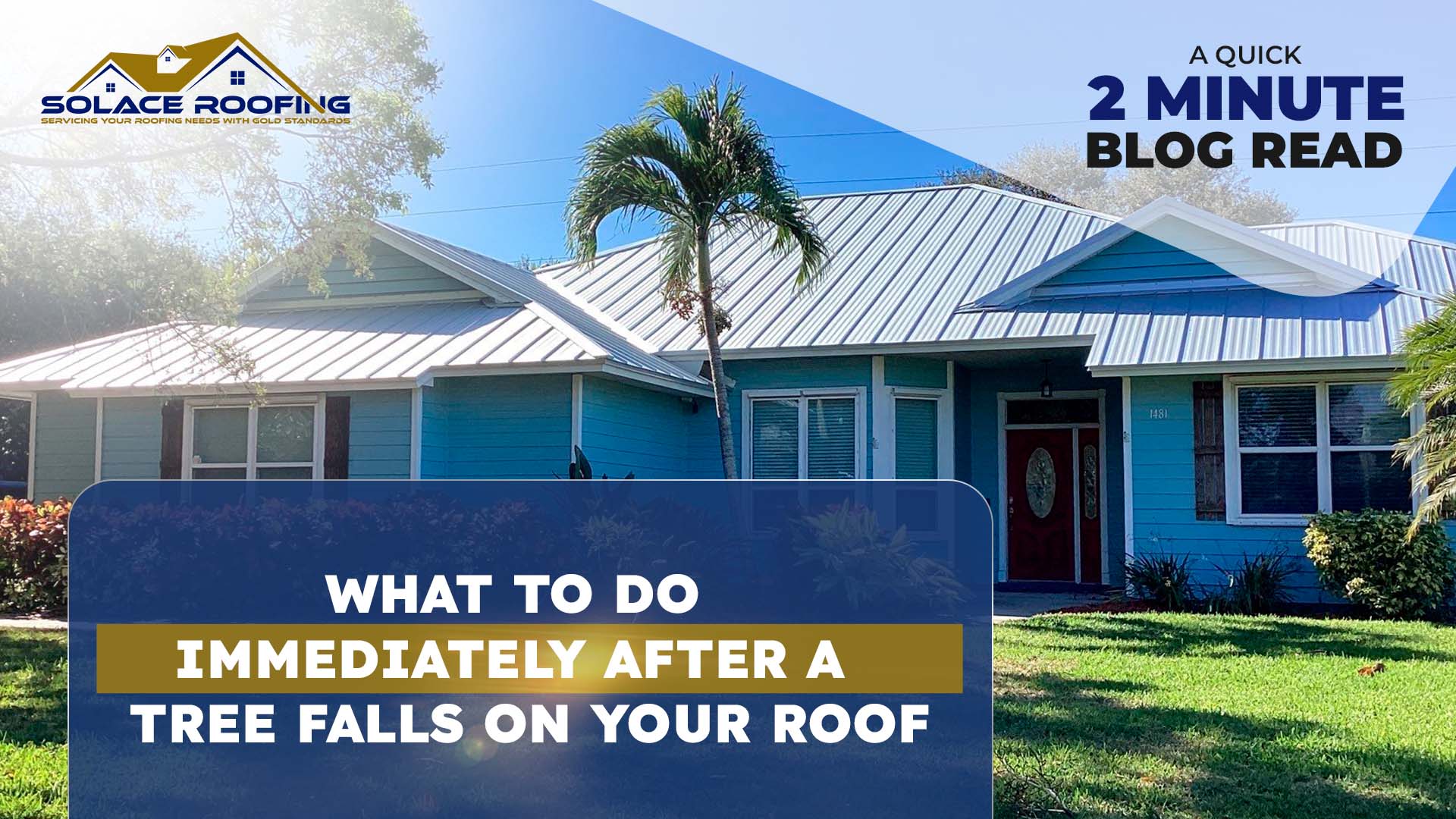
When a tree falls on your roof, the first thing to do is stay calm, stay inside, and stay away from the damaged area — structural integrity is unknown until a professional assesses it. What happens in the hours immediately after a tree falls on your roof determines the scope of damage, the strength of your insurance claim, and how quickly your home is protected from further exposure. Florida’s storm season creates these situations regularly on the Treasure Coast, and homeowners who know the right steps respond faster and recover better.
Here’s exactly what to do — in order — when a tree comes down on your home.
Why the First 24 Hours Matter Most
A tree impact doesn’t just damage the surface. It can compromise structural framing, puncture the underlayment, displace flashing, and open the home to water intrusion in multiple places simultaneously. Every hour the damage goes unaddressed in Florida’s humid environment is an hour moisture has to work further into the decking and insulation. Acting quickly and in the right sequence protects your home and your claim.
8 Steps to Take Immediately After a Tree Falls on Your Roof
1. Get Everyone Out of Affected Rooms Right Away
Before anything else, move everyone away from the rooms directly below or adjacent to the impact zone. If the tree is large, avoid those areas entirely until a structural assessment confirms the home is safe to occupy. Don’t go into the attic. Don’t go on the roof. The tree’s weight and the unknown condition of the framing beneath it make both actions dangerous until a professional has evaluated the structure.
2. Call 911 If There Are Injuries or Immediate Hazards
If anyone is injured, or if the tree has struck a gas line, sparked an electrical issue, or created any fire risk, call emergency services immediately before doing anything else. Downed power lines near the impact area should also trigger a 911 call — utility hazards around tree impacts are common and serious.
3. Document Everything With Photos and Video
Once you’ve confirmed the area is safe to approach from a distance, document the damage thoroughly. Take photos and video of the tree, the impact point, every visible area of damage, and the interior ceiling beneath the impact zone. Capture wide shots and close-ups. This documentation becomes the foundation of your insurance claim, and the more comprehensive it is immediately after the event, the stronger your claim position. According to FEMA, prompt and thorough documentation is one of the most important steps a homeowner can take after a disaster event.
4. Call Your Homeowners Insurance Company
Contact your insurance provider as soon as documentation is complete. Report the incident, describe the damage, and ask about your policy’s timeline requirements for filing. Most policies require prompt notification after a covered event — delays can complicate the claims process. Ask specifically whether emergency protective measures, like a tarp installation, are covered under your policy and what documentation they require for reimbursement.
5. Cover the Damage With a Tarp — But Only If It’s Safe
Temporary weatherproofing limits additional damage from rain exposure while repairs are arranged. If the damaged area is accessible from the ground or a low, stable section of the structure — and only if it is genuinely safe to approach — a heavy-duty tarp secured over the impact zone prevents water intrusion from compounding the damage. If there is any doubt about safety, leave it for the professionals. The additional water damage from one rain event is far less costly than an injury.
6. Do Not Attempt to Remove the Tree Yourself
Tree removal from a damaged roof is a job for licensed tree service professionals with the right equipment — not a DIY project. An improperly removed tree can cause secondary structural damage, shift debris into the home, and create liability complications with your insurance claim. Wait for a professional tree removal team to clear the tree before any roofing work begins. Your roofing contractor can often coordinate this directly.
7. Call a Licensed Roofing Contractor for Emergency Assessment
A licensed roofing contractor should be on-site as soon as possible after a tree impact — ideally the same day. A professional roof inspection after a tree strike assesses not just the visible damage but the structural condition of the framing, the extent of underlayment compromise, and any secondary damage the tree may have caused away from the primary impact point. Solace Roofing responds to storm and impact damage events across the Treasure Coast and can provide a documented assessment that supports your insurance claim.
8. Save Every Receipt and Keep a Written Record
From the moment the tree falls, start keeping a written log — timestamped notes on every call made, every professional contacted, every action taken. Save all receipts for emergency supplies, temporary repairs, and hotel stays if the home becomes temporarily uninhabitable. These records matter when your insurance adjuster reviews the claim and when any dispute arises about the scope or timing of your response.
Act Fast, Stay Safe, Get the Right Help
The steps you take after a tree falls on your roof set the trajectory for everything that follows — the repair timeline, the insurance outcome, and how quickly your home is protected and restored. Speed matters, but so does sequence.
Solace Roofing provides emergency roof assessments and works alongside homeowners through the insurance claims process from inspection through repair. Contact us for a free assessment and let’s get your home protected as quickly as possible.
Solace Roofing | Craftsmen Who Care