Roof Storm Damage
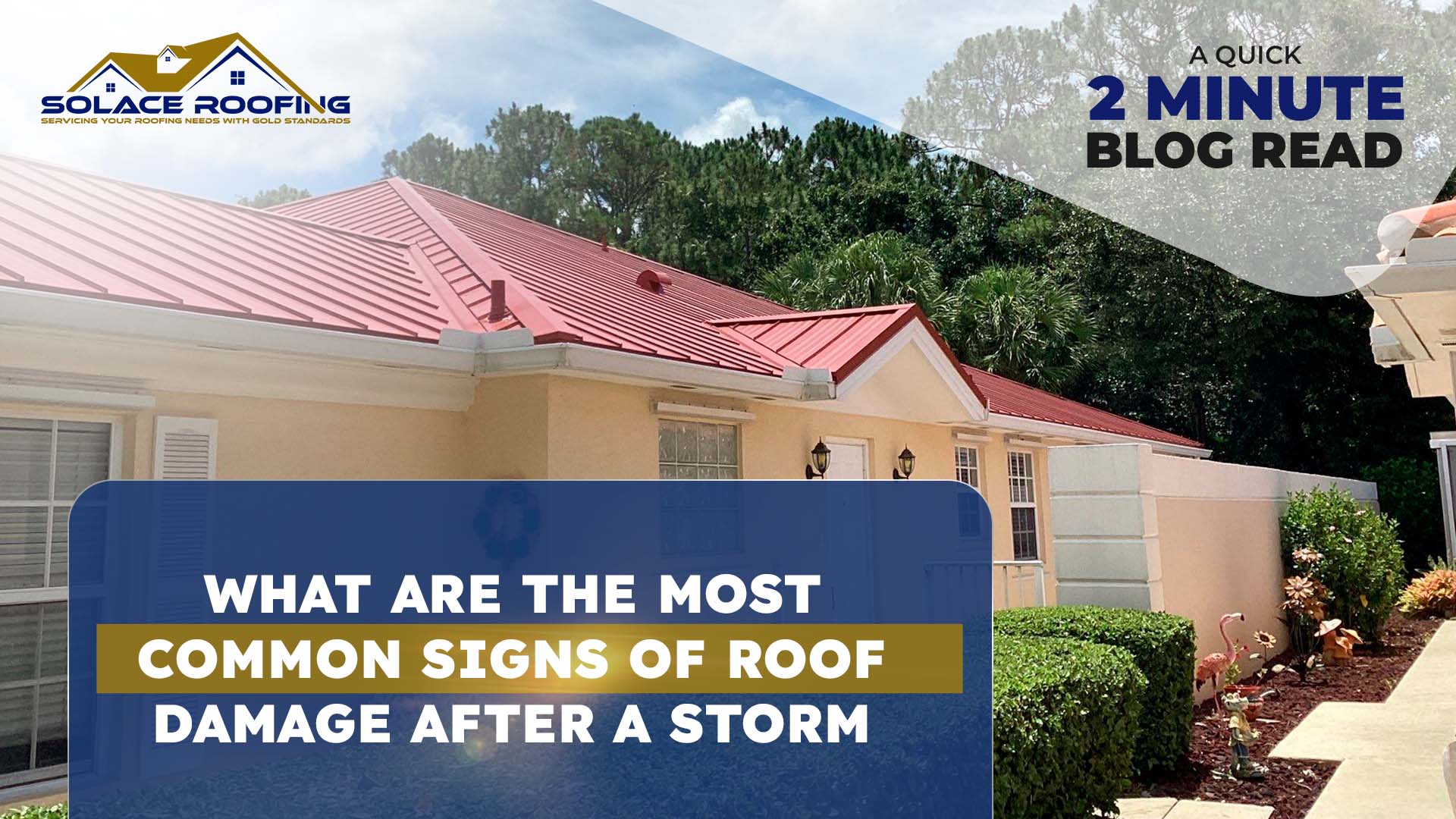
The most common signs of roof storm damage include missing or lifted shingles, granule loss in your gutters, damaged flashing, water stains on interior ceilings, dented gutters and fascia, and visible light through the attic decking. The challenge in Florida is that many of these signs are subtle right after a storm — and what looks minor on the surface can indicate significant hidden damage underneath. Waiting to investigate is one of the costliest mistakes a Treasure Coast homeowner can make after a major weather event.
Here’s what to look for after a storm and why acting quickly on what you find protects your home and your insurance claim.
Why Post-Storm Inspection Can’t Wait in Florida
Florida storms don’t just damage roofs. They create conditions where existing vulnerabilities accelerate rapidly.
A storm that lifts three shingles leaves the underlayment exposed to direct UV and rain. A storm that separates flashing at a chimney or skylight creates a water entry point that will funnel moisture into the decking with every rain that follows. In Florida’s post-storm heat and humidity, water that enters a compromised roofing system can cause mold growth in insulation within 24 to 48 hours. The sooner you identify the damage, the more you limit the consequences.
7 Common Signs of Roof Damage After a Storm
1. Missing, Lifted, or Cracked Shingles
This is the most visible sign of wind damage and the easiest to spot from the ground. Look for shingles that are completely gone, folded back, cracked across the face, or sitting at an angle relative to surrounding shingles. Even a single missing shingle is an open entry point for water. After any storm with sustained wind, walk the perimeter of your home and scan every roof plane for surface irregularities before assuming everything is intact.
2. Granule Loss Collecting in Gutters and Downspouts
After a storm, check your gutters for an unusual accumulation of granules — the small mineral particles that coat asphalt shingles. Some granule shedding is normal over time, but a significant deposit after a storm indicates that the protective surface layer of your shingles has been compromised by impact or wind abrasion. Granule-depleted shingles lose UV resistance and waterproofing ability quickly in Florida’s sun, accelerating deterioration in the months that follow.
3. Damaged, Lifted, or Separated Flashing
Flashing — the metal material sealing joints around chimneys, vents, skylights, and roof edges — is highly vulnerable to wind uplift. After a storm, inspect all flashing details for sections that are pulled away from the surface, buckled, or visibly bent. Separated flashing doesn’t always look dramatic, but even a small gap at a roof penetration is enough to channel water directly into your roofing system with every subsequent rain. A professional roof inspection will assess every flashing detail your eye might miss.
4. Water Stains on Interior Ceilings or Walls
A water stain inside your home after a storm is confirmation that water has breached the roofing system and traveled far enough to show up on a finished surface. This is a serious sign — by the time moisture appears on drywall, it has already passed through the roofing material, the underlayment, the decking, and the insulation. Document the stain with photos immediately and contact a licensed roofing contractor. According to FEMA’s home disaster guidance, prompt documentation of interior water damage is critical for insurance claims.
5. Dented or Damaged Gutters, Soffit, and Fascia
Hail and wind-driven debris leave marks on soft metal surfaces like gutters and fascia boards before they leave obvious marks on harder roofing materials. If you see dents, cracks, or impact marks on your gutters or roofline trim after a storm, assume your roofing material absorbed similar impacts and schedule an inspection to verify the extent of the damage. Dented gutters are also a strong indicator that an insurance claim may be warranted.
6. Visible Daylight or Moisture in the Attic
After any significant storm, check your attic during daylight hours. Any point where you can see natural light coming through the decking is an active breach in your roofing system. Look equally for wet insulation, water staining on the underside of the decking, or a musty smell that wasn’t present before the storm. The Insurance Institute for Business & Home Safety identifies attic inspection as one of the most reliable ways to detect storm damage that isn’t visible from the exterior.
7. Pooling Water or Drainage Issues on Flat Roof Sections
For homes with flat or low-slope roof sections, a post-storm check for standing water is essential. Florida’s heavy rain events can overwhelm drainage systems if storm debris has blocked drains or if wind has displaced surface membrane material. Pooling water adds structural load and accelerates membrane deterioration. Any section where water sits for more than 48 hours after rainfall should be evaluated by a licensed contractor immediately.
Spot It Early. Fix It Before It Grows.
Knowing the common signs of roof storm damage puts you ahead of the problem before it compounds. Most storm damage that’s caught within days of an event is manageable and repairable. The same damage left for weeks becomes a much larger and more expensive situation — especially in Florida’s climate.
After your next storm, don’t wait for a drip to tell you something is wrong. Schedule a free post-storm roof inspection with Solace Roofing and get a clear assessment of exactly what the storm left behind.
Solace Roofing | Craftsmen Who Care

David Penagos